In short
- Same time every week, 20 minutes, on the big screen.
- Start with who needs attention, not who’s winning.
- Look at speed to lead and the funnel before you look at closings.
- End with one thing each person will do this week.
Set it up once
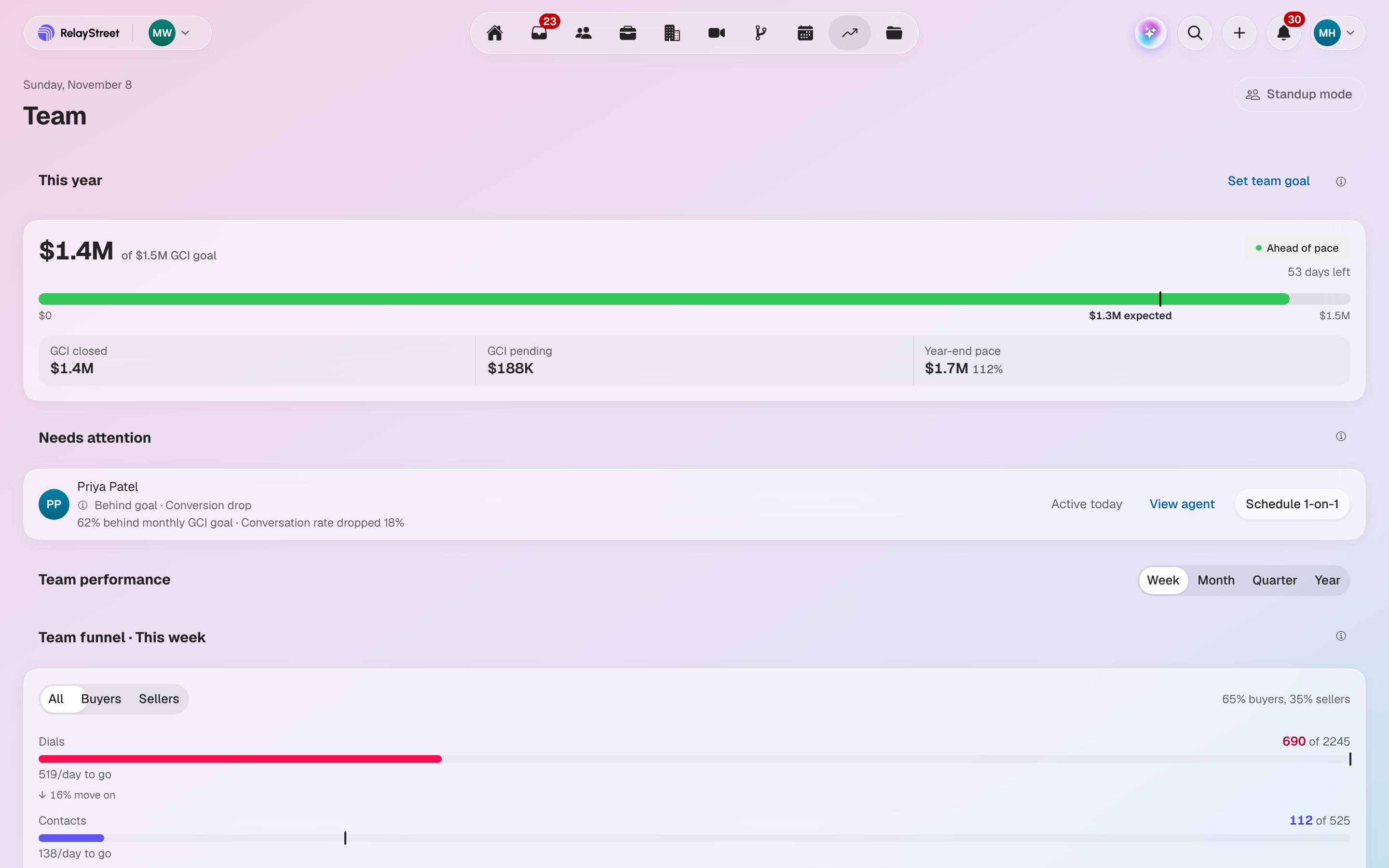
Pick a time that never moves. Monday morning works for most teams. Put Performance on the office TV with Standup mode, which runs five slides in order so the meeting has a shape before anyone speaks.
Start with who needs attention
The Team page flags people before you have to ask: no activity, behind goal, a drop in conversion, leads released back, a lot of no-shows, or no Smart Plans running. Talk about these one to one after the meeting, not in front of the room. In the meeting, just say you saw it.
Look at the leads, then the funnel
- Speed to lead: the team’s average time to first personal contact, and who was slowest.
- The team funnel: where leads stop moving. That’s the bottleneck to work on.
- Agent activity: dials, conversations, appointments set, appointments met and closings, side by side.
Only manual activity counts toward each agent’s numbers. What Smart Plans and Aiva sent is counted separately, so nobody’s number is padded by automation.
Show the board, briefly
Put up the leaderboard for the week. Pick the metric that matches what you’re working on: appointments set if you’re building the pipeline, conversations if people aren’t picking up the phone. ISAs get their own metrics, so they’re not ranked against agents on closings.
If you run a challenge, “Everybody wins” works better than a race for a team that’s behind. Everyone who hits the number gets the prize.
End with one thing each
The 20 minutes
- Needs attention, noted for one-to-ones
- Speed to lead and the slowest lead
- The funnel and its bottleneck
- The leaderboard on one metric
- One commitment from each person, written down